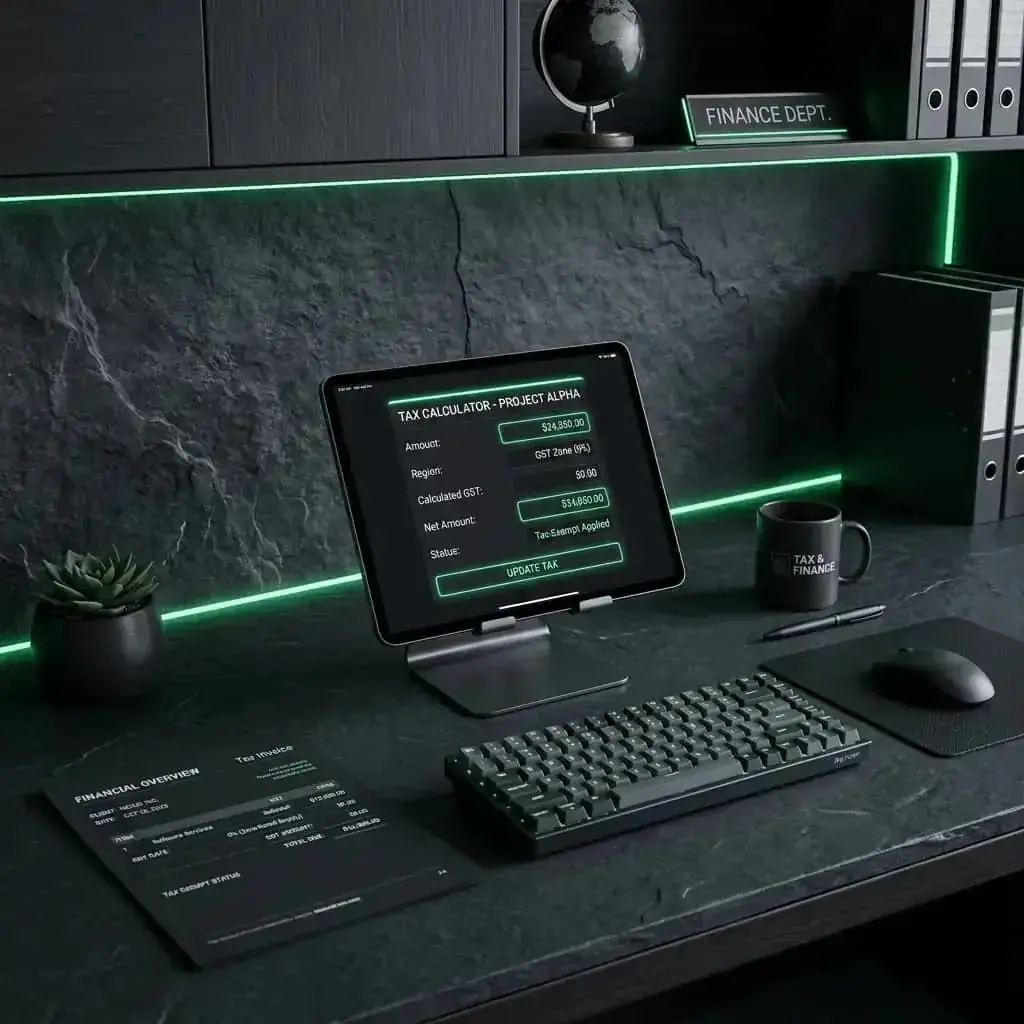
Invoicing international clients from India classifies your work as an Export of Services. Service exports are zero-rated under GST, meaning you owe zero tax on your invoices. However, you must file a free Letter of Undertaking (LUT) on the portal at the start of every fiscal year to claim this exemption legally.
Most local CAs do not understand digital freelance transactions. They are trained for retail shops. They will tell you to ignore GST until you make Rs. 20 Lakhs, or they will tell you to pay 18% tax and claim a refund. Both routes are wrong. If you export services, register for GST once you hit Rs. 20 Lakhs, file your free LUT, and protect your earnings. If you ever face an inquiry, having a clear log is key. Read our Section 44ADA tax audit survival guide to learn how to keep your compliance bulletproof.
Let me tell you a story about how this plays out when you ignore compliance. A talented independent UI/UX designer from Pune named Priya reached out to me in tears after receiving an official tax demand notice from the GST department.
She was billing US startups for remote design work, earning Rs. 24,00,000 (Rs. 24 Lakhs). Since she was exporting services, she assumed GST didn't apply to her. However, because she had not filed a Letter of Undertaking (LUT) on the GST portal before issuing invoices, the GST department slapped her with a retrospective tax demand of 18% IGST on her total gross earnings, plus interest and penalties.
She had to hire a tech-forward CA to represent her case and retroactively submit proof of foreign inward remittances (FIRA). While they resolved the main tax demand, Priya still had to pay a hefty compliance penalty that wiped out her savings.
---
The Legal Mechanism: Export of Services and GST

Under the Integrated Goods and Services Tax (IGST) Act, exporting services is classified as a "Zero-Rated Supply." This means the government does not charge GST on international invoices. The goal is to make Indian exports competitive.
To qualify as an export of services:
- The provider must be in India: You are working from your desk in Bangalore or Pune.
- The client must be outside India: Your contract is with a startup registered in Delaware or London.
- Payment must be in foreign currency: You receive USD, EUR, or GBP in your bank account.
- The transaction requires an LUT: You must submit a Letter of Undertaking before billing.
If you hit the Rs. 20,0,000 (Rs. 20 Lakhs) gross annual receipt limit, you *must* register for GST in India, even if your tax liability is entirely zero due to export rules.
---
How to File the LUT: A 5-Minute Compliance Hack

The Letter of Undertaking (LUT) is a free online declaration submitted on the GST Portal. It states that you will fulfill all export obligations without paying IGST upfront.
To file your LUT:
- Log in to the official GST Portal.
- Go to Services > User Services > Form GST RFD-11.
- Select the financial year (e.g., FY 2026-27).
- Enter the names of two witnesses (colleagues or friends) and sign using your Electronic Verification Code (EVC) or DSC.
You must submit this form at the beginning of every fiscal year. If you skip this step, every international invoice you issue is technically liable for standard domestic GST rates.
---
The Wise vs. Traditional Bank Conversion Leak

When earning in USD, how you receive payments matters. Let to let traditional Indian banks auto-convert your USD payments is throwing money away. Traditional banks charge a high currency markup (often 2% to 3.5%) and hide it in the conversion rate.
A freelance content writer in Delhi was celebrating landing a $4,500/month contract with an enterprise SaaS firm in San Francisco. He had set up his payments to go directly to his public sector bank account using wire transfers. The bank claimed they charged zero fees.
But when we audited his bank statement, we discovered the bank was converting his USD using an exchange rate that was Rs. 2.80 below the mid-market rate. He was losing Rs. 12,600 every single month to hidden conversion markups.
We made him open a multi-currency account with a modern fintech provider (like Wise or Skydo), which locked in the real-time exchange rate for a flat, transparent fee of just $15. He saved over Rs. 1.3 Lakhs a year in hidden banking fees. Use modern multi-currency routes and pair them with our presumptive tax guide to save your money, and read our freelance banking fees audit for a complete breakdown of banking markups. For established freelancers looking to grow their organic inbound leads and stop cold calling, check out our high-authority SEO consulting services.